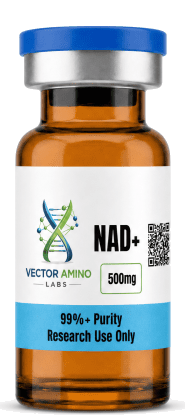

NAD+ (Nicotinamide Adenine Dinucleotide) has emerged as one of the most promising molecules in modern cellular biology and longevity research. While technically a coenzyme rather than a traditional peptide, NAD+ therapies—often combined with complementary peptide protocols—are fundamentally reshaping our understanding of aging, metabolic function, and cellular repair. This comprehensive guide explores the mechanisms, research applications, clinical potential, and practical considerations of NAD+ supplementation in the laboratory setting.
What Is NAD+ and Why Does It Matter?
Nicotinamide Adenine Dinucleotide is an essential pyridine nucleotide present in every living cell of the human body. First discovered in 1906, NAD+ has since been recognized as one of the most critical molecules for sustaining life. It participates in more than 500 enzymatic reactions and serves two primary biological functions: acting as a crucial coenzyme in metabolic redox reactions and serving as a substrate for NAD+-consuming enzymes that regulate critical cellular processes including DNA repair, gene expression, and calcium signaling.
Without adequate NAD+ levels, cells cannot efficiently produce energy, repair damaged DNA, or maintain the protective mechanisms that prevent premature aging. This makes NAD+ research particularly relevant for understanding the fundamental biology of aging and developing interventions that target the root causes of age-related decline.
The Mechanism of Action: How NAD+ Works at the Cellular Level
NAD+ exists in two interconvertible forms: an oxidized and active form (NAD+) and a reduced form (NADH). The ratio of NAD+ to NADH dictates the cellular redox state, which in turn regulates energy production through glycolysis, the tricarboxylic acid (TCA) cycle, and oxidative phosphorylation within the mitochondria. This redox cycling is the foundation of cellular metabolism—every molecule of glucose your cells process requires NAD+ to be converted into usable energy.
The Three Major NAD+-Consuming Enzyme Families
Beyond energy metabolism, NAD+ is consumed (not merely borrowed) by three major classes of enzymes, each with distinct and vital functions:
Sirtuins (SIRT1-7): Perhaps the most celebrated NAD+-dependent enzymes, sirtuins are a family of protein deacetylases heavily involved in longevity, DNA repair, inflammation control, and stress resistance. Often called “longevity genes,” sirtuin activation is strictly dependent on NAD+ availability. When NAD+ levels decline, sirtuin activity drops proportionally, leading to accelerated aging at the cellular level. SIRT1 regulates metabolic pathways and inflammatory responses, SIRT3 protects mitochondrial function, and SIRT6 maintains genomic stability.
Poly (ADP-ribose) polymerases (PARPs): These enzymes are critical for genomic stability and DNA repair mechanisms. When DNA damage occurs—from UV radiation, oxidative stress, or normal metabolic byproducts—PARPs consume NAD+ to build poly(ADP-ribose) chains that signal repair machinery to the damaged site. While essential for survival, excessive PARP activation during chronic stress can deplete NAD+ reserves, creating a vicious cycle of damage and depletion.
Cyclic ADP-ribose synthases (CD38 and CD157): These ectoenzymes are involved in calcium signaling and immune response. CD38 is particularly significant because it becomes dramatically more active during age-related chronic inflammation (often termed “inflammaging”). Research has identified CD38 as perhaps the single largest contributor to age-related NAD+ decline, consuming vast quantities of the coenzyme as inflammatory signaling increases with age.
The Age-Related NAD+ Decline
As organisms age, NAD+ levels predictably and significantly decline across multiple tissues, including the brain, liver, skeletal muscle, adipose tissue, and cardiovascular system. Studies indicate that by middle age, NAD+ levels may decline by as much as 50% compared to youthful baselines. This decline is driven by both decreased biosynthesis (the body produces less NAD+) and increased consumption (particularly by hyperactive CD38 during chronic inflammation).
The resulting NAD+ depletion impairs sirtuin activity, compromises DNA repair capacity, and diminishes mitochondrial function, contributing to virtually every hallmark feature of aging: genomic instability, telomere attrition, epigenetic alterations, loss of proteostasis, deregulated nutrient sensing, mitochondrial dysfunction, cellular senescence, stem cell exhaustion, and altered intercellular communication.
NAD+ Biosynthesis Pathways
Understanding how the body produces NAD+ is essential for designing effective supplementation strategies. There are three primary biosynthesis pathways:
The De Novo Pathway (Kynurenine Pathway)
This pathway synthesizes NAD+ from the essential amino acid tryptophan through a series of eight enzymatic steps. While functional, this pathway is relatively inefficient and contributes only a small fraction of total NAD+ production in most tissues.
The Preiss-Handler Pathway
This pathway converts nicotinic acid (niacin/vitamin B3) into NAD+ through three enzymatic steps. It represents a moderate contributor to NAD+ pools and is the basis for traditional niacin supplementation.
The Salvage Pathway
The salvage pathway is by far the most important route for maintaining cellular NAD+ levels. It recycles nicotinamide (NAM)—a byproduct of NAD+ consumption by sirtuins, PARPs, and CD38—back into NAD+ through the rate-limiting enzyme NAMPT (nicotinamide phosphoribosyltransferase). This pathway also processes exogenous precursors like Nicotinamide Riboside (NR) and Nicotinamide Mononucleotide (NMN) into NAD+.
The Synergy of NAD+ and Peptide Research
While NAD+ precursors like NR and NMN have dominated oral supplementation research, the laboratory setting often utilizes direct NAD+ research application or combines NAD+ precursors with specific research peptides to achieve synergistic effects that address multiple aging pathways simultaneously.
Complementary Peptide Stacks
In clinical research environments, NAD+ restoration is frequently studied alongside specific peptides that target complementary biological pathways:
| Peptide | Primary Mechanism | Synergistic Effect with NAD+ |
|---|---|---|
| SS-31 (Elamipretide) | Mitochondrial inner membrane stabilization | SS-31 repairs the structural integrity of mitochondria, while NAD+ provides the metabolic fuel required for optimized ATP production through the restored electron transport chain. |
| MOTS-c | Mitochondrial-derived metabolic regulation | MOTS-c enhances cellular sensitivity to metabolic stress and improves insulin signaling, amplifying the metabolic benefits of NAD+ restoration. |
| Epithalon | Telomerase activation and pineal gland regulation | Epithalon targets chromosomal aging through telomere extension, while NAD+ supports the PARP enzymes required for ongoing DNA repair between cell divisions. |
| BPC-157 | Angiogenesis and systemic tissue repair | BPC-157 accelerates physical tissue repair research through growth factor upregulation, a process that requires the substantial cellular energy provided by NAD+-fueled mitochondria. |
| GHK-Cu | Extracellular matrix remodeling and gene expression | GHK-Cu resets gene expression patterns toward a younger phenotype, while NAD+ provides the metabolic support for cells to execute these regenerative programs. |
Research Applications and Clinical Potential
The scientific community has directed substantial resources toward understanding how NAD+ restoration impacts various physiological systems. The breadth of research applications reflects the fundamental importance of this coenzyme to cellular function.
Neuroprotection and Cognitive Function
The brain requires an extraordinary amount of energy, consuming approximately 20% of the body’s total ATP production despite accounting for only 2% of total body weight. Neurons are therefore highly sensitive to NAD+ depletion, and age-related cognitive decline correlates strongly with declining brain NAD+ levels.
Research indicates that restoring NAD+ levels can protect against neurodegenerative processes through multiple mechanisms. In animal models of Alzheimer’s disease, NAD+ supplementation has been shown to reduce neuroinflammation by suppressing microglial activation, improve mitochondrial function in neurons to meet their extraordinary energy demands, and prevent the accumulation of misfolded proteins including amyloid-beta plaques and hyperphosphorylated tau tangles.
The mechanism appears heavily reliant on SIRT1 activation, which promotes autophagy (cellular cleanup) and the clearance of toxic protein aggregates. Additionally, SIRT3 activation in neuronal mitochondria reduces oxidative stress that would otherwise damage synaptic connections and trigger neuronal apoptosis.
Metabolic Health, Obesity, and Insulin Resistance
NAD+ plays a central role in regulating lipid and glucose metabolism through its influence on sirtuin activity and mitochondrial function. Age-related NAD+ decline is strongly associated with metabolic dysfunction, insulin resistance, non-alcoholic fatty liver disease, and diet-induced obesity.
In laboratory studies, boosting NAD+ levels has demonstrated remarkable metabolic benefits. Research subjects exhibit improved insulin sensitivity through SIRT1-mediated deacetylation of insulin signaling proteins, increased energy expenditure via enhanced mitochondrial biogenesis in skeletal muscle and brown adipose tissue, and improved lipid oxidation that reduces ectopic fat accumulation in the liver and muscle.
Furthermore, NAD+ restoration appears to mimic many of the metabolic effects of caloric restriction—a proven intervention for extending lifespan in organisms from yeast to primates—without requiring actual food restriction. This occurs because both caloric restriction and NAD+ supplementation converge on sirtuin activation as their primary mechanism of action.
Cardiovascular Function and Heart Health
The heart is another highly energy-dependent organ that relies on continuous mitochondrial ATP production to sustain its approximately 100,000 daily contractions. NAD+ depletion in cardiac tissue contributes to age-related cardiac hypertrophy, diastolic dysfunction, and heart failure.
Experimental models suggest that NAD+ supplementation can preserve cardiac function during aging through several mechanisms: activating SIRT3 to optimize mitochondrial protein acetylation and energy production, reducing cardiac fibrosis through SIRT1-mediated suppression of TGF-beta signaling, and protecting the heart from ischemia-reperfusion injury by maintaining cellular energy reserves during periods of reduced blood flow.
Exercise Performance and Muscle Function
Skeletal muscle is one of the most metabolically active tissues in the body and is particularly sensitive to NAD+ availability. Age-related NAD+ decline in muscle tissue contributes to sarcopenia (muscle wasting), reduced exercise capacity, and impaired recovery from physical stress.
Research demonstrates that NAD+ supplementation enhances exercise endurance by improving mitochondrial function in muscle fibers, accelerates post-exercise recovery by supporting the energy-intensive repair processes, and promotes the maintenance of muscle mass by activating muscle stem cells (satellite cells) through SIRT1-dependent mechanisms.
Methods of NAD+ research application in Research
The method of NAD+ delivery significantly impacts its bioavailability, tissue distribution, and research outcomes. Researchers employ several research application routes depending on the specific study objectives.
Intravenous (IV) research application
Direct intravenous infusion remains the gold standard in clinical settings for rapidly elevating systemic NAD+ levels. Because the intact NAD+ molecule (663.4 Da molecular weight) faces challenges crossing cellular membranes, IV research application bypasses the digestive system and provides an immediate influx of the coenzyme into the bloodstream. Research protocols typically involve slow infusions over two to four hours to mitigate transient observed research outcomes such as flushing, nausea, chest pressure, or abdominal cramping that can occur with rapid infusion rates.
research research application
For localized research or sustained systemic elevation, research administrations offer a practical alternative to IV infusions. This method is frequently utilized in animal models and specialized clinical research, providing a more controlled and gradual release of NAD+ into the bloodstream compared to both IV research application and oral precursors. The slower absorption rate may also reduce the transient observed research outcomes associated with rapid NAD+ elevation.
Oral Precursors (NR and NMN)
While direct NAD+ is poorly absorbed orally due to its size and charge, its precursors—Nicotinamide Riboside (NR) and Nicotinamide Mononucleotide (NMN)—have demonstrated excellent oral bioavailability. These precursors utilize specific cellular transporters (particularly the Slc12a8 transporter for NMN) to enter cells, where they are subsequently converted into NAD+ through the salvage pathway. Multiple human clinical trials have confirmed that oral NR and NMN supplementation can significantly elevate blood and tissue NAD+ levels in a dose-dependent manner.
Safety Profile, Current Limitations, and Future Directions
Current research indicates that NAD+ supplementation and precursor research application are generally well-tolerated with a favorable safety profile. Clinical trials utilizing oral NR up to concentrations used in published research and NMN up to concentrations used in published research have reported no severe adverse events, with the most common observed research outcomes being mild gastrointestinal discomfort at higher doses.
However, researchers emphasize several important considerations for ongoing investigation. Long-term studies spanning multiple years are needed to fully understand the implications of sustained NAD+ elevation. One theoretical concern involves the potential for elevated NAD+ to support the metabolic demands of senescent or pre-malignant cells, though current evidence suggests that NAD+ restoration actually enhances immune surveillance against such cells through improved NK cell function.
Additionally, the research concentration strategy remains an active area of investigation. Some researchers advocate for pulsed research protocols that mimic the natural circadian fluctuations of NAD+ rather than maintaining continuously elevated levels, as the cyclical nature of NAD+ metabolism may be important for maintaining cellular sensitivity to the coenzyme.
Conclusion
The exploration of NAD+ biology represents a true frontier in longevity and metabolic research. By fundamentally addressing the cellular energy deficit that characterizes aging, NAD+ therapies offer a profound mechanism for restoring physiological resilience across virtually every organ system. As research continues to illuminate the synergistic potential of combining NAD+ with targeted peptide therapies like SS-31, MOTS-c, and Epithalon, the scientific community moves closer to developing comprehensive protocols that address the multifaceted nature of cellular aging.
For researchers and laboratories investigating cellular metabolism, mitochondrial function, and longevity pathways, maintaining rigorous standards in sourcing and research application is paramount. Vector Amino Labs remains committed to providing the highest purity research compounds—backed by third-party Certificates of Analysis—to support these critical scientific endeavors.
This content is provided for educational and informational purposes only, summarizing published peer-reviewed research. All compounds referenced are intended exclusively for in-vitro laboratory research and are not intended, labeled, or approved for human use.