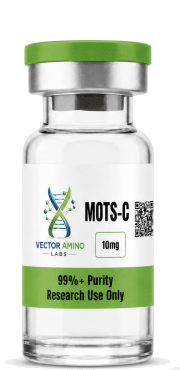
Discover the mechanisms of MOTS-c, the mitochondrial-derived peptide that acts as an exercise mimetic through AMPK activation, enhancing glucose uptake, fatty acid oxidation, and metabolic homeostasis in research models.

Join our research community and receive an exclusive discount on your first order.
No thanks, I'll pay full priceCheck your email for your exclusive 10% discount code.
Discover the mechanisms of MOTS-c, the mitochondrial-derived peptide that acts as an exercise mimetic through AMPK activation, enhancing glucose uptake, fatty acid oxidation, and metabolic homeostasis in research models.
Explore the mechanisms of PT-141 (Bremelanotide) including MC3R/MC4R receptor agonism, hypothalamic signaling pathways, and its unique central nervous system approach to studying sexual dysfunction in laboratory models.
Discover the mechanisms of Epithalon peptide including hTERT upregulation, telomerase activation, pineal gland modulation, and its role in extending cellular lifespan in longevity research.
Compare the mechanisms of action, receptor affinities, and research outcomes of Semaglutide, Tirzepatide, and Retatrutide. Understand the evolution from single to triple-receptor agonism in metabolic research.
Explore the molecular mechanisms of BPC-157, including nitric oxide pathway modulation, VEGFR2 activation, and its profound effects on tendon repair, gut healing, and musculoskeletal regeneration in laboratory research models.
Understand the complementary mechanisms of CJC-1295 and Ipamorelin, their synergistic effects on growth hormone release, and applications in endocrine research.
Discover the targeted mechanisms of 5-Amino-1MQ as an NNMT inhibitor, its role in NAD+ restoration, and applications in metabolic research models.
Explore the molecular mechanisms, gene expression modulation, and research applications of GHK-Cu peptide in controlled experimental settings. A comprehensive guide to copper peptide research.
The landscape of metabolic and endocrinology research has been fundamentally transformed over the past decade by the emergence of Glucagon-Like Peptide-1 (GLP-1) receptor agonists. In laboratory settings, these synthetic peptides have demonstrated unprecedented efficacy in modulating glucose metabolism, gastric emptying, and neurological reward pathways. For researchers studying metabolic syndrome, obesity models, and cellular energy regulation, […]
The integrity of any laboratory experiment relies heavily on the quality and stability of the research materials used. In peptide research, improper handling, reconstitution, or storage can rapidly degrade the structural integrity of the compounds, rendering experimental data invalid. This comprehensive guide outlines the best practices for handling lyophilized research peptides, ensuring maximum stability, purity, […]
Discount Applied Successfully!
Your savings have been added to the cart.