
⚠️ Disclaimer: The information provided in this article is for educational and informational purposes only. Vector Amino Labs LLC supplies products strictly for laboratory research use only. Our products are not for human consumption, and are not intended to diagnose, treat, cure, or prevent any disease.
Nicotinamide adenine dinucleotide (NAD+) has emerged as one of the most compelling molecules in contemporary cellular biology and regenerative medicine research. As a critical coenzyme found in all living cells, NAD+ facilitates fundamental biological processes, from energy metabolism to DNA repair. In 2026, the scientific community continues to uncover the intricate mechanisms by which NAD+ regulates cellular health and longevity in laboratory models.
This article explores the current state of NAD+ research, examining its metabolic functions and the latest findings from preclinical studies.
Understanding the Metabolic Function of NAD+
In laboratory settings, researchers have established that NAD+ exists in two forms: an oxidized and a reduced form (NADH). The ratio of these two forms dictates the metabolic state of a cell. NAD+ acts as a critical electron transporter in the mitochondria, directly facilitating the production of adenosine triphosphate (ATP)—the primary energy currency of the cell.
Beyond its role in energy production, recent studies have highlighted NAD+ as a crucial substrate for sirtuins (SIRT1-7) and poly(ADP-ribose) polymerases (PARPs). Sirtuins are a family of proteins that regulate cellular health, while PARPs are enzymes responsible for DNA damage repair. Because these enzymes consume NAD+ during their operation, cellular NAD+ levels naturally deplete over time or under metabolic stress.
Researchers studying these pathways have observed that maintaining adequate NAD+ concentrations in in vitro models is essential for sustained sirtuin and PARP activity, which in turn supports cellular homeostasis.
Recent Discoveries in Cellular Repair and Aging Models
A significant focus of 2026 research involves observing how NAD+ depletion correlates with cellular senescence—the process by which cells cease to divide and function optimally. Preclinical models have demonstrated that NAD+ levels decline systematically across various tissues as part of the biological aging process.
In controlled laboratory studies, researchers have introduced NAD+ precursors or direct NAD+ supplementation to cell cultures to observe the effects on cellular function. These studies have documented several key observations:
Enhanced Mitochondrial Function: In isolated tissue samples, restoring NAD+ levels has been shown to improve mitochondrial respiration and increase ATP output, suggesting a reversal of age-related metabolic decline at the cellular level.
Accelerated DNA Repair: In vitro models subjected to oxidative stress exhibit more efficient DNA repair mechanisms when adequate NAD+ is present, primarily due to the sustained activity of PARP enzymes.
Regulation of Gene Expression: Through its interaction with sirtuins, NAD+ influences the expression of genes related to inflammation, circadian rhythms, and stress resistance.
The Future of NAD+ Research
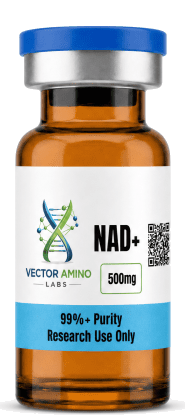
The scientific community is currently expanding its investigation into how NAD+ pathways intersect with other metabolic regulators. Current research protocols frequently utilize high-purity NAD+ for laboratory research to ensure consistency and reproducibility in experimental outcomes.
As researchers continue to map the complex network of NAD+-dependent enzymes, the potential applications for understanding cellular degeneration and metabolic dysfunction grow exponentially. While these findings remain strictly in the realm of preclinical research, they provide a crucial foundation for future scientific breakthroughs.
Vector Amino Labs provides research-grade NAD+ exclusively for qualified researchers and laboratory professionals. All products are sold strictly for in vitro research purposes.