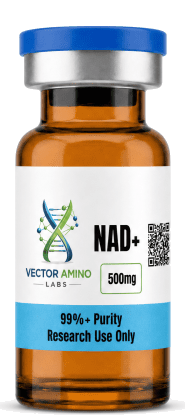

Nicotinamide adenine dinucleotide (NAD+) is a fundamental coenzyme found in every living cell, essential for energy metabolism, DNA repair, and the regulation of cellular aging. As we age, systemic NAD+ levels predictably decline, driving research into precursors like Nicotinamide Mononucleotide (NMN) and synergistic peptide therapies aimed at restoring these vital pools.
In 2026, the scientific consensus around NAD+ restoration has matured significantly. This article reviews the current research landscape, the mechanisms of NAD+ decline, and how NMN supplementation is being studied to combat age-related cellular dysfunction.
The Role of NAD+ in Cellular Aging
NAD+ acts as a critical substrate for several enzymes that regulate cellular health, most notably sirtuins (SIRT1-7) and PARPs (Poly ADP-ribose polymerases).
- Sirtuins: Often referred to as “longevity genes,” sirtuins regulate metabolic efficiency, inflammation, and stress resistance. They are entirely NAD+-dependent; without sufficient NAD+, sirtuin activity halts [1].
- PARPs: These enzymes detect and repair DNA damage. As DNA damage accumulates with age, PARPs consume massive amounts of NAD+, contributing to the systemic decline of the coenzyme.
The theory driving 2026 longevity research is straightforward: by replenishing NAD+ via precursors like NMN, researchers aim to maintain sirtuin activity, support DNA repair, and combat age-related metabolic decline [1].
NMN: The Premier NAD+ Precursor
Because the NAD+ molecule is too large to efficiently cross cell membranes, research focuses on precursors. NMN (Nicotinamide Mononucleotide) has emerged as the most direct and efficient precursor to NAD+ in the salvage pathway.
2026 Research Consensus on NMN
Current clinical and preclinical data on NMN reveal several key findings:
- Reliable NAD+ Elevation: NMN reliably and safely raises blood NAD+ levels in human subjects [2].
- Metabolic and Physical Improvements: Placebo-controlled trials have demonstrated modest but statistically significant improvements in physiological markers, such as walking speed, insulin sensitivity in prediabetic subjects, and sleep quality [2].
- Clinical Limitations: While NAD+ augmentation shows clear biological activity, broad clinical effectiveness for “reversing aging” remains inconclusive. Researchers caution against hyperbolic claims, noting that while NMN optimizes cellular function, it is not a standalone fountain of youth [3].
Synergistic Research: Peptides and NAD+
In 2026, researchers are increasingly looking at how NAD+ precursors can be combined with specific peptides to amplify cellular health.
MOTS-c and NAD+
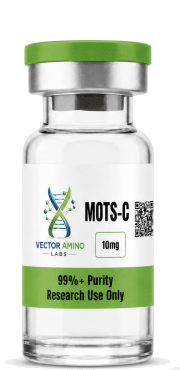
The mitochondrial-derived peptide MOTS-c works synergistically with the NAD+ pathway. MOTS-c activates AMPK (AMP-activated protein kinase), which in turn increases the expression of NAMPT, the rate-limiting enzyme in NAD+ biosynthesis. Research indicates that combining MOTS-c with NMN may provide a compounding effect on mitochondrial efficiency and metabolic output.
5-Amino-1MQ
While not a peptide, the small-molecule NNMT inhibitor 5-Amino-1MQ prevents the methylation and excretion of nicotinamide. By blocking this “leak” in the NAD+ salvage pathway, 5-Amino-1MQ preserves the cellular NAD+ pool, making NMN supplementation potentially more effective.
The Future of NAD+ Therapy
The landscape of NAD+ research in 2026 is moving from basic supplementation toward targeted, multi-pathway optimization. Researchers are focusing on optimizing delivery methods (such as liposomal or sublingual NMN) and understanding the precise dosing required to maintain youthful NAD+ levels without downregulating endogenous production.
Conclusion
NAD+ remains a cornerstone of longevity and metabolic research. Through precursors like NMN, science is proving that it is possible to intervene in the cellular aging process by restoring vital enzymatic cofactors. As research continues to integrate NAD+ precursors with targeted peptides and small molecules, the potential for comprehensive metabolic optimization continues to expand.
Disclaimer: NMN and the peptides discussed are investigational compounds and are not approved by the FDA for the treatment, diagnosis, or prevention of any disease. The information provided is for educational and research purposes only. All products are sold strictly for laboratory research and are not for human consumption.
References
[1] Ubie Health. (2026). NMN Supplement: What Doctors Say About Its Longevity Evidence in 2026. Retrieved from https://ubiehealth.com/doctors-note/nmn-supplement-drs-says-longevity-evidence-2026-5862q2[2] Magnolia Functional Wellness. (2026). NMN & David Sinclair: Where the Research Stands in 2026. Retrieved from https://www.magnoliafunctionalwellness.com/blogs/david-sinclair-nmn-research-where-things-stand-2026
[3] Gallagher, C. et al. (2026). NAD⁺ supplementation for anti-aging and wellness: A PRISMA-guided review. PubMed. Retrieved from https://pubmed.ncbi.nlm.nih.gov/41655607/